Aging in Place in Bloomington: The Bathroom Decisions That Matter
Aging in place is won or lost in one room. The bathroom concentrates the house's hardest movements, standing from sitting, stepping over a wall, balancing on a wet surface, into the smallest space it has, and the changes that keep it usable are mostly structural courtesies installed at the right moment: solid blocking inside walls for grab bars, a shower entered without a climb, controls reachable before the water starts.
Bloomington's aging-in-place guide is written for a market whose head is local remodelers: the transfer rehearsed, the seat and blocking priced as structure, and the walk-in tub compared against the barrier-free shower in the same document. The guide's rule is that accessibility is a fit question, not a product category, and the bather's own movement is the specification.
The honest order of operations starts with what costs least and carries most. Lever handles and a handheld shower on a slide bar are fixture decisions. A comfort height toilet is a swap. The larger work, a curbless shower or a walk-in tub, is a project, and the two answer different needs: a curbless shower serves anyone who cannot lift a foot or who uses a chair or walker, while a walk-in tub serves the soaker whose problem is the tub wall, with fill and drain times that must suit the person using it.
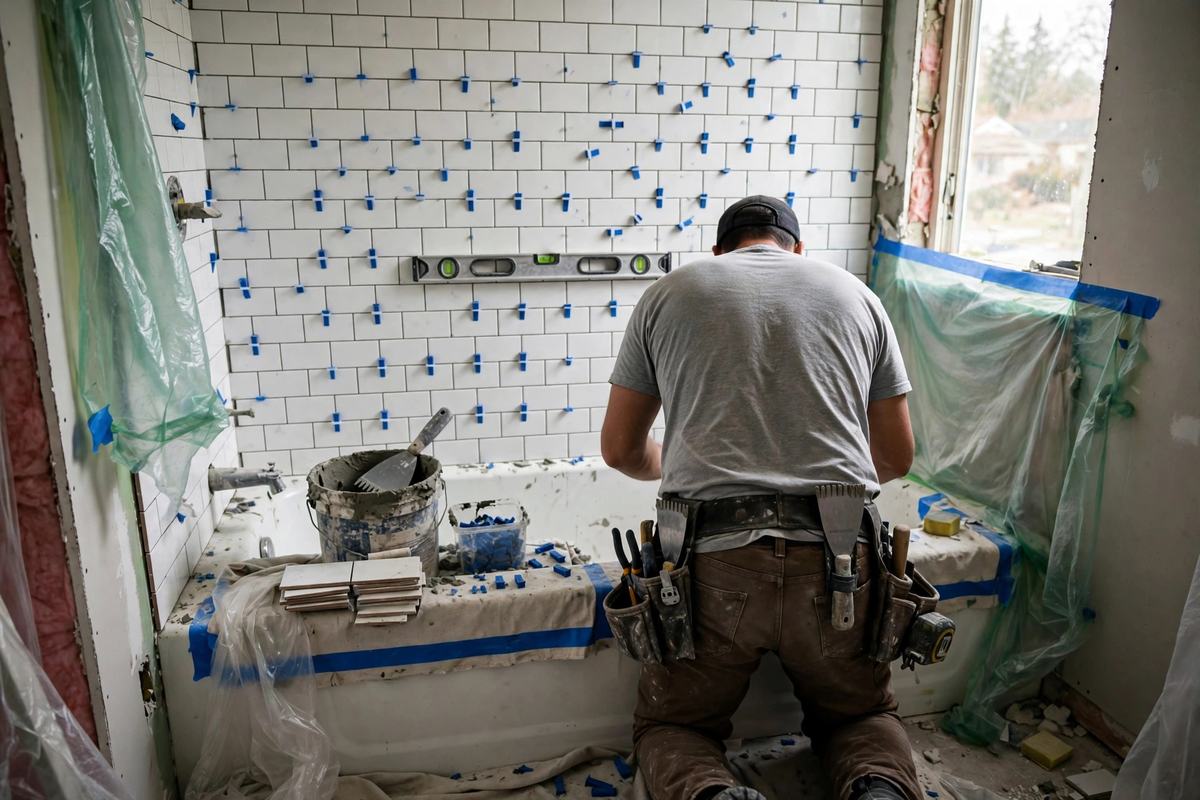
Timing is the discipline this guide exists to teach. Every accessibility feature is cheapest while a bathroom is already open for other work, and most expensive as an emergency after a fall. A remodel planned for looks this year is the natural carrier for the blocking, valve placement, and threshold work that the same household will need for safety later, and a contractor who raises the subject unprompted is telling you something good about how they think.
Request a callback
Prefer to talk later? Leave your details and an independent local pro will call you back. No charge to you, no obligation.
Griffy Lake Bath Remodeling is a free referral service. Submitting this form connects you with independent local contractors who provide the work.